

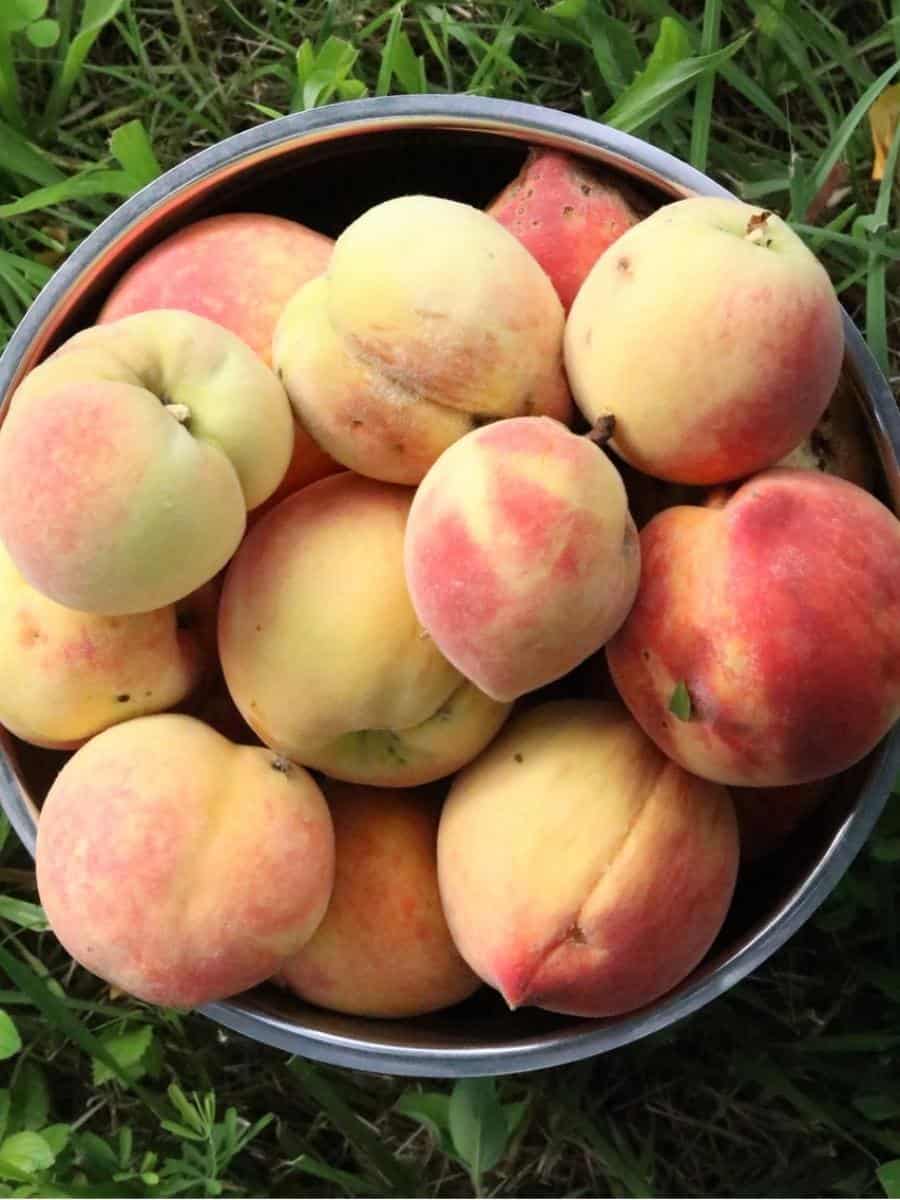
This simple method for how to ripen peaches is one we use every year on our homestead. Each summer, we have to pick peaches before they’re fully ripe in order to save them from the local wildlife. If you’ve ever brought home firm peaches and wondered how to ripen peaches quickly, I’ll show you exactly what we do.
This post may contain affiliate links. As an Amazon Associate, I earn from qualifying purchases at no extra cost to you. Please read our disclosure policy for details.
Peach season is one of our favorite times on the homestead. I think I say that about every season – but it’s true! That’s one of the blessings about this way of life. Being able to live seasonally, find beauty in each one, and cherish all the little moments. Our fruit trees require care and maintenance, and the peach harvest is very dependent on whether or not we get a late frost. Sometimes all the buds freeze in early spring, and there is no harvest during those years. When the weather (and bugs) cooperates and the trees are loaded down with fruit, it is so rewarding to get an abundant harvest. That’s why knowing how to ripen peaches at home matters — it really helps you make the most of what you’ve grown.

Why Peaches Need to Be Picked Before They’re Fully Ripe
There are several reasons why peaches might need to be picked before they’re fully ripe:
Peaches are one of those things that go from hard, unripe, and “they’re not ready yet” to an entire tree being wiped out from birds, squirrels, raccoons, and opossums overnight! So, over the years we’ve learned that we have to pick them before they’re fully ripe if we want to have a harvest, and let the ripening process happen inside – that’s why knowing how to ripen peaches at home is so helpful.


How to Ripen Peaches on the Counter (Simple, Natural Method)
1. Lay Peaches in a Single Layer
No stacking: Lay peaches out in rows on the counter, making sure they are not touching.
Stem side down: The direction you lay them does matter, and the most stable position to put them is “head down.”
2. Lightly cover them
Use towels or sheets: This is the best way I’ve found to ripen peaches. Use a lightweight towel on the counter if there aren’t too many, or cover an entire table with a sheet if you have a lot that need ripened at one time. The towels help trap ethylene gas while still allowing airflow, which helps peaches ripen evenly without bruising.
Why airflow matters: It’s important to position the peaches so they are close together, but not touching. This helps each one ripen at an even rate. They will ripen faster on areas that touch which can create bruising.
3. Keep an even Temperature
Ideal temperature range: Room temperature is the best to ripen peaches at. That can vary widely from house to house, but if you have control over the temp then the best range is between 65–75°F. Often in the middle of summer our house is warmer than this, probably around 80 and that works just fine. The warmer the air is the faster your peaches will ripen.
Avoid the refrigerator: If peaches are firm and unripe the best place to ripen them is at room temperature. If you put them in the refrigerator the ripening process slows dramatically and the cold air can cause uneven ripening. After they are fully ripe you can store them in the fridge for longer preservation.
Maintaining a steady room temperature is one of the most important parts of how to ripen peaches evenly.
4. Keep them out of direct sunlight
Avoid windowsills: Keeping them uncovered in a windowsill can cause them to ripen faster, but it will be uneven.
Too high of a temperature: The uneven sunlight will cause them to get too hot on the areas where it hits resulting in mushy spots.
5. Check Daily for Ripeness
Gently press near the stem: Do a test by pressing down near the stem, and when the flesh begins to give under gentle pressure the peaches are beginning to ripen. Once peaches begin to ripen, the process speeds up quickly so check them at least once a day – but twice is better.
Smell test: If the peaches have a strong, sweet peachy smell that is a good indication that they are ripe.


How Long Does It Take Peaches to Ripen?
When using this method, peaches typically take 2–4 days to ripen, depending on a few factors:
- Firmness at picking: The harder they are, the longer they’ll take.
- Room temperature: Warmer rooms speed up ripening.

How to Ripen Peaches Faster
- Brown paper bag method: You can place peaches in a brown paper bag to hasten ripening. Use a loosely folded paper bag – not a sealed one – to prevent moisture buildup. Be sure not to stack them though.
- Add a banana or apple: Most fruits emit ethylene gas, and bananas and apples produce a higher amount which causes other fruits to ripen faster. You can mix these fruits in with your peaches for quicker ripening.
- Caution about over-ripening: Peaches also produce ethylene which does a good job of ripening them on their own. Containing the gas in a paper bag or with bananas or apples can cause over-ripening, so check your peaches more frequently if you decide to go that route.
What NOT To Do:
Here are a few quick reminders about what not to do when you are trying to ripen peaches:
Don’t stack peaches on top of each other — they will bruise easily.
Avoid refrigerating peaches before they are fully ripe — it slows the ripening process down.
Never seal peaches in plastic bags to ripen — only use paper bags.

Would you like to save this?
How to Tell If a Peach Is Ripe


Storage & Preservation
Storing Ripe Peaches Short-Term: If you plan on using your peaches in a day or two, then you can leave them out on the counter. If it will be longer, then consider storing them in the refrigerator so they keep longer. When I make peach butter or jam, I like to slice the peaches into a bowl and keep that in the fridge until I’m ready to can them.
Freezing Peaches: Peeled peaches freeze quite well also. You can first blanch them to remove the skins, or peel and then cut them into slices. If you plan on cooking them after thawing, then just fill up quart or gallon freezer bags. If you want to use them in smoothies, oatmeal, or recipes where they need to be in individual slices then flash freeze them in a single layer on a baking tray before transferring to freezer bags.
Canning & Preserving Peaches: Canning is a great way to preserve and store your peaches. Jam, jelly, and peach butter are my favorite ways to can them. You can also dehydrate peach slices or purée and make fruit leather.

Conclusion
Growing and preserving peaches is a rewarding way to be more self-sufficient on your homestead, and learning how to ripen peaches naturally is an important part of that. I hope this post helped show you how to ripen peaches at home, and that you feel confident giving it a try now.
FAQ
More Homesteading Posts
Join the List
Subscribe
For more homestead recipes, make sure to sign up for my newsletter so you don’t miss a post!
Did you try this?
We’d love to see it! Tag @heartwood_holler_homestead on Instagram! Use #heartwoodholler
I hope you love this post on How To Ripen Peaches! If you try it, I’d love to hear how it turned out for you.
Pin It For Later!




Reading this makes me sooo hungry for a ripe peach! Great tips!
Thanks Kayla!
This is so helpful, thank you! We have a little peach tree growing our yard, but it’s not mature yet. Definitely saving these tips for the future!
Hope it helps in the future!
Very useful and informative post! Thank you for sharing, can’t wait for peach season, yum.
You’re welcome, I can’t wait either!
Love peaches and these are really good tips. Thanks!
Thanks so much!
Peaches are one of my absolute favorite fruits! Thanks for the tips!
Mine too, you’re welcome!
Thanks for the tips! I LOVE peaches! They are my most favorite fruit! When we bought our old home place there was a small, very old, peach orchard. Sadly all the trees were dead. We did find 2 peach trees on the edge of the wood line that we believe were volunteers. They make peaches but they’re small and the squirrels have beat us to them every time! We planted 2 more peach trees last year. I would love to have our own peaches! We have planted them at every home we’ve had but always move before they make fruit!
Ours are very susceptible to fungus issues. Most of our fruit trees are, it’s the humidity where we live. They all are a lot of work to keep healthy! I hope you get some from the ones you planted! Do you plan to stay there or move in the future?
Very helpful info!
I’m so glad!
Woah! I’m really digging the template/theme of this site.
It’s simple, yet effective. A lot of times it’s tough to get that “perfect balance” between user friendliness and visual appeal.
I must say you’ve done a great job with this.
In addition, the blog loads very quick for me on Opera.
Excellent Blog!
Thank you SO much for the compliments, it really means a lot! And thanks for reading!
wish you best and best
Thank you!
Enjoy every single day
I agree!
Good day! Do you know if they make any plugins to assist with
SEO? I’m trying to get my blog to rank for some targeted keywords but
I’m not seeing very good gains. If you know of any please share.
Thank you!
Hi, I use Yoast. Also, Keysearch can help you see the search volume for keywords. Hope that helps!